Is Crypto Invoicing Safe? Custody and Security Explained (2026)
Is crypto invoicing safe? A 2026 look at the real risks — custody model, account takeover, wrong-chain errors — and the security practices that make it dependable for businesses.
TL;DR
Crypto invoicing can be safe and dependable, but "safe" depends on the custody model and your own security hygiene. The main risks are where your funds sit (custodial vs non-custodial), account takeover, and wrong-chain payment errors. Each has a known mitigation. Here's an honest breakdown.
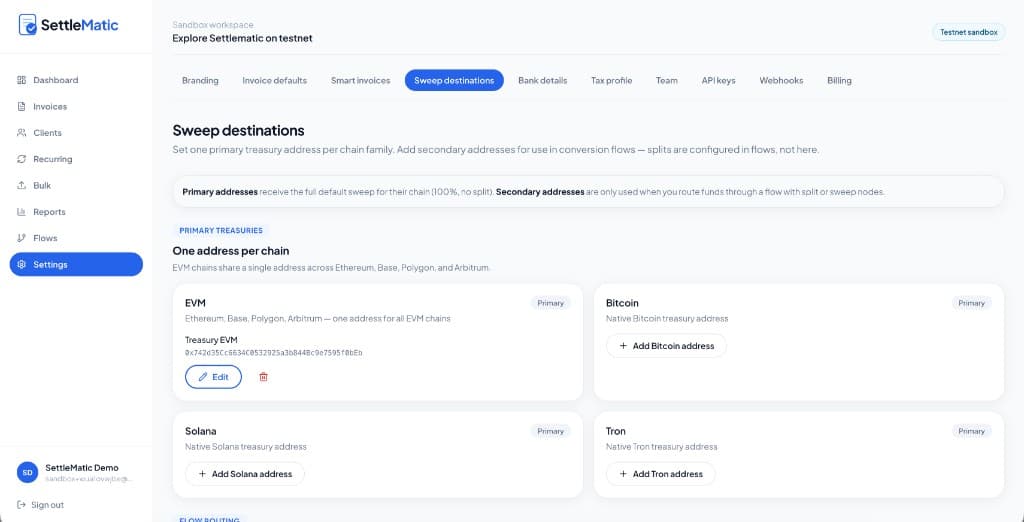
I run product at Settlematic, a non-custodial platform, so I'll be upfront about the bias and fair about the risks that apply to any tool.
The risks worth understanding
Safety isn't a yes/no — it's a set of specific risks, each with a mitigation:
1. Where your funds sit (custody risk)
The biggest structural question. With a custodial platform, your funds sit in the platform's wallets until you withdraw, so a platform problem can affect your money. With a non-custodial platform, funds sweep to wallets you control, removing that counterparty risk. This is the single most important safety factor, and we cover it fully in custodial vs non-custodial [crypto invoicing](/blog/custodial-vs-non-custodial-crypto-invoicing).
2. Account takeover
If someone gets into your billing account, could they redirect funds? Good platforms add cooldown windows on destination-wallet changes, so a sweep destination can't be changed and drained instantly. Your part: enforce 2FA on billing admin accounts and resist phishing. The platform provides the guardrails; you provide the discipline.
3. Wrong-chain payment errors
A client sending funds on a network you don't support is a common operational mistake, not a hack — but it causes pain. Mitigations: a strict asset/network allowlist so the payment page only offers supported options, and a testnet dry run before going live. See paying a crypto invoice on the wrong chain.
What "safe" looks like in practice
A dependable crypto invoicing setup has: a non-custodial custody model (funds you control), 2FA and change-cooldowns against takeover, an allowlist against wrong-chain errors, and clean records so nothing is ambiguous. None of these is exotic — they're the standard controls for handling money on-chain.
Your responsibilities don't disappear
Whichever platform you choose, some safety is on you: secure the wallets you control, enforce 2FA, train staff against phishing, and use testnet before mainnet. Non-custodial gives you control of the funds, which also means control of the security around them. That's a fair trade for most businesses, but it's a trade, not a free pass.
The bottom line
Crypto invoicing is safe when you choose a sound custody model, enforce account security, and prevent wrong-chain errors with allowlists and testing. The risks are known and the mitigations are standard. To see the non-custodial model directly, run a free testnet invoice.
Explore Settlematic
Ready to try the workflow in your own workspace? Start on testnet, then explore our how it works guide and product features.
Frequently asked questions
- Is non-custodial crypto invoicing safer than custodial?
- For your treasury, generally yes — funds sweep to wallets you control, removing platform counterparty risk. But you take on key security in return. Both still require good account hygiene.
- Can someone redirect my payments if they hack my account?
- Good platforms add cooldown windows on destination changes to prevent instant redirection, and 2FA reduces takeover risk. Enforce 2FA and protect the admin account.
- What's the most common safety mistake?
- Operationally, wrong-chain payments. An allowlist and a testnet dry run prevent most of them.