How to Set Up Recurring Crypto Invoices for Retainer Clients (2026)
Set up recurring crypto invoices for retainers and subscriptions in 2026 — schedules, fiat-denominated amounts, multi-chain payment, and non-custodial settlement, step by step.
TL;DR
Recurring crypto invoicing turns a monthly retainer into an automated schedule instead of a manual re-send. You define the client, the fiat amount, the cadence, and the accepted assets once; the platform issues each invoice on schedule and the client pays via a hosted link. Here's how to set it up and what to watch for.
I run product at Settlematic, so this is biased toward how we built recurring billing, but the principles are general.
Who needs recurring crypto invoices
Anyone billing the same amount on a cadence: agencies with monthly retainers, SaaS-style subscriptions, ongoing advisory or maintenance arrangements. If you're manually duplicating last month's invoice and changing the date, that's a recurring schedule waiting to be automated.
Setting it up
- Create or select the client and set their default details.
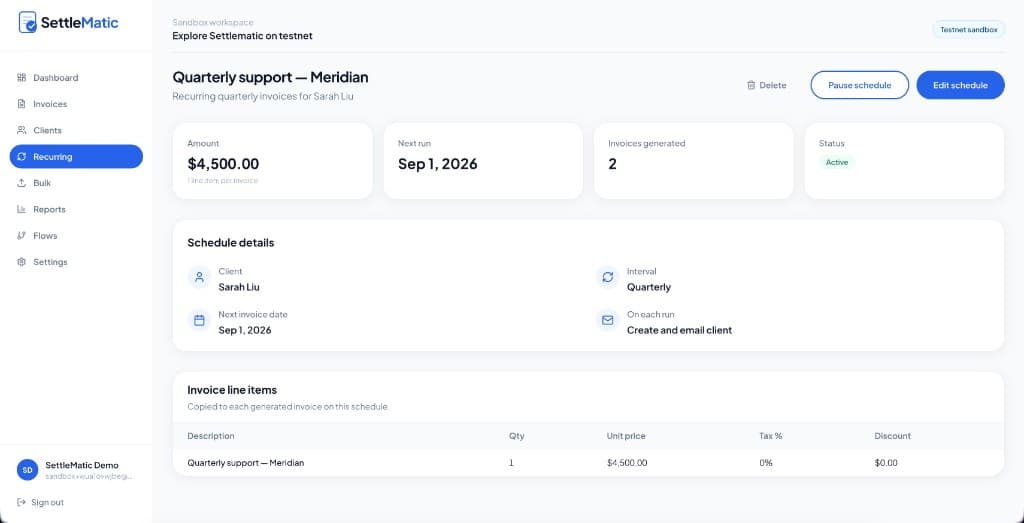
- Define the invoice template — line items, fiat amount, terms — that repeats each cycle.
- Set the cadence — weekly, monthly, quarterly — and the start date.
- Allowlist the assets and networks you'll accept each cycle (for example USDC on a couple of chains).
- Set the destination wallet for sweeps. Funds land where you control them each cycle.
- Activate the schedule. The platform issues each invoice automatically and sends the client a hosted payment link. (Clients & recurring billing.)
Fiat-denominated is the right default for retainers
Quote the recurring amount in fiat, not in coins. A $3,000/month retainer should be $3,000 every month, with the crypto amount calculated at each payment. Otherwise a price move turns a fixed retainer into a variable one, which neither you nor your client wants.
What to watch for
- Failed or late cycles. Decide how overdue recurring invoices are handled — reminders, status changes — so a missed month doesn't silently disappear.
- Mid-term changes. If the retainer amount changes, update the template so future cycles reflect it without disturbing past records.
- Reconciliation. Recurring invoices should still carry invoice numbers and export cleanly, so month-end stays simple. See reconciling crypto payments.
Try it
Create a free workspace and set up a test recurring schedule on testnet to see the cadence and payment flow before going live with a real retainer.
Explore Settlematic
Ready to try the workflow in your own workspace? Start on testnet, then explore our how it works guide and product features.