How to Bill International Clients in Crypto (2026 Guide)
How to invoice international clients and get paid in crypto in 2026 — avoiding bank delays and FX spread, quoting in fiat, accepting stablecoins, and keeping compliant records.
TL;DR
Crypto invoicing is a natural fit for cross-border work — no correspondent-bank delays, no per-wire fees, and settlement in minutes rather than days. Quote in your fiat currency, accept stablecoins so amounts stay stable, and keep records that satisfy your accountant and theirs. Here's the approach.
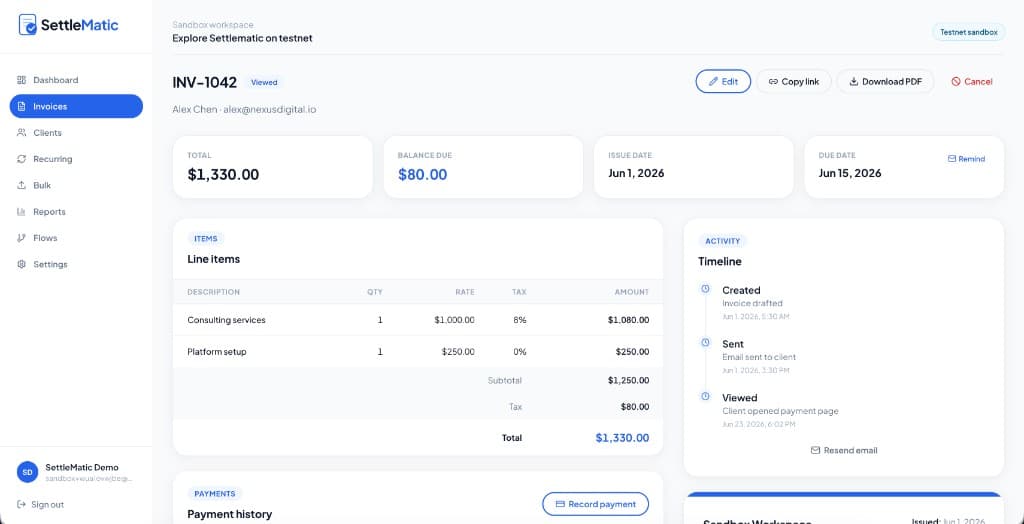
I run product at Settlematic, so this is biased but practical. The mechanics apply to any non-custodial invoicing tool.
Why crypto suits cross-border billing
Traditional international payments route through correspondent banks, which adds days, fees, and FX spread, and sometimes silent failures that you only discover when the money doesn't arrive. A stablecoin payment settles on-chain directly, usually in minutes, with fees set by the network rather than a chain of intermediaries. For freelancers and agencies serving clients in other countries, that's a real cash-flow improvement, not a novelty.
The setup for international clients
- Quote in a stable fiat currency you both understand — often USD. The invoice shows the fiat figure; the crypto amount is computed at payment.
- Prefer stablecoins. USDC or USDT keep the paid amount aligned to the invoice value, removing volatility from a cross-border transaction that might take a day to action.
- Allowlist convenient networks. Clients in different regions may favor different chains for fee reasons; offering a couple of options reduces friction.
- Use a hosted payment page. A single link works regardless of the client's country or bank — they pay from their wallet, no international transfer form required.
- Sweep to a wallet you control so funds aren't sitting in a platform balance subject to withdrawal rules.
Records and compliance
International billing raises the bar on records. You want the fiat value at time of payment, an invoice number, the client, and the transaction reference — all exportable. Most jurisdictions treat crypto received for services as income at its fiat value on the day received, and cross-border work may carry its own reporting and tax obligations on both sides. This is general information, not advice: confirm your obligations (and any KYC or geographic restrictions your platform enforces) with a qualified advisor. Our tax reporting guide covers the records side.
Practical cautions
- Be explicit about accepted networks in your payment instructions to avoid wrong-chain errors across time zones, where a fix can take a day.
- Check geographic restrictions. Some platforms restrict certain regions; confirm your client's location is supported before you send the invoice.
- Agree the asset upfront. Telling the client "USDC on these networks" before sending avoids back-and-forth.
Try it
Create a free workspace and send a testnet invoice to confirm the cross-border flow — a single link your client opens from anywhere, paid in stablecoin, swept to your wallet.
Explore Settlematic
Ready to try the workflow in your own workspace? Start on testnet, then explore our how it works guide and product features.