Coinbase Commerce vs a Dedicated Crypto Invoicing Platform for B2B (2026)
Coinbase Commerce vs a dedicated crypto invoicing platform for B2B in 2026 — checkout depth vs invoice lifecycle, partial payments, tax exports, custody, and which fits your billing.
TL;DR
Coinbase Commerce is a recognizable, quick-to-set-up crypto checkout — strong for straightforward acceptance. For B2B receivables, though, the design center isn't invoice lifecycle: partial payments across chains, recurring retainers with aging, and jurisdiction-specific tax buckets are where a dedicated invoicing platform pulls ahead. Here's the honest comparison.
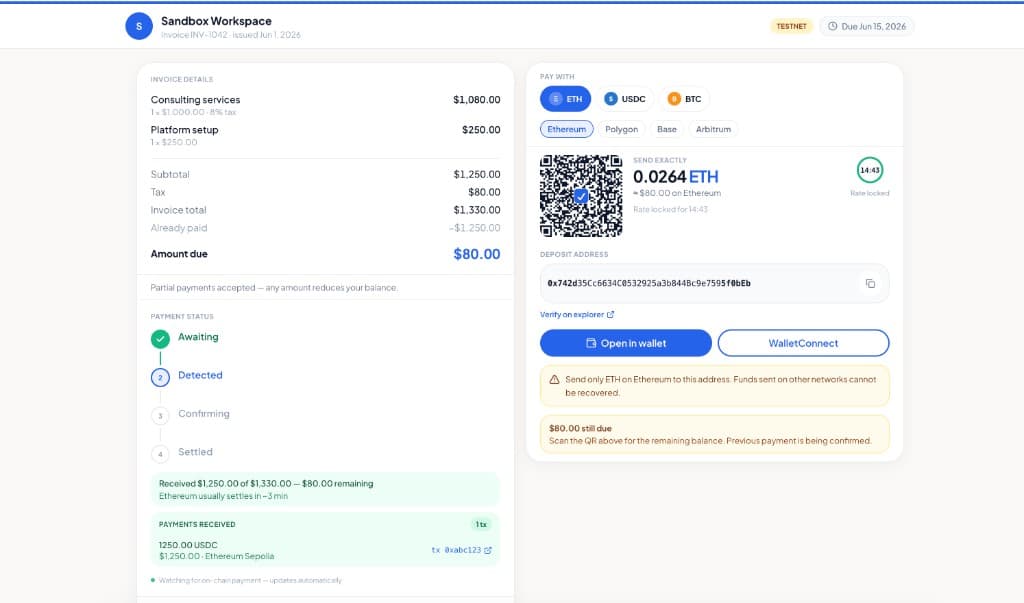
Disclosure: I run product at Settlematic, a dedicated invoicing platform. I'll be clear about where Coinbase Commerce is the right call.
Where Coinbase Commerce is the right choice
Brand trust and speed are real advantages. If you want to accept crypto on a checkout with a name your clients recognize, and your needs are "take a payment for this amount," Coinbase Commerce does that well and quickly. For experimental crypto volume — say, under a small percentage of revenue — a simple, familiar checkout can be the rational choice. Don't over-engineer a problem you don't have yet.
Where B2B outgrows checkout
The gap shows up when crypto becomes a material part of your receivables and you start doing actual accounts receivable:
- Partial payments. B2B invoices get paid in tranches, sometimes in different assets. A checkout optimized for one-shot payment doesn't represent a single invoice moving through PARTIALLY_PAID states. (Partial payments.)
- Invoice lifecycle. Invoice numbers, credit notes, aging by client, branded PDFs your client's AP team expects — these are invoicing concepts, not checkout concepts.
- Recurring retainers. Subscriptions and retainers want a schedule, not a manually re-created payment each cycle.
- Tax buckets and exports. Jurisdiction-specific tax handling and CSV exports with invoice numbers and fiat values are what your accountant needs at month-end. (Tax reporting.)
The migration pattern
A common path: a company starts on a simple checkout, hits reconciliation pain at month-end as crypto volume grows, and migrates to an invoicing-first platform. The practical insight is that switching costs are lower earlier — before you've accumulated several quarters of explorer-based reconciliation debt. If you can already see B2B receivables in your future, it's cheaper to set up invoicing now than to migrate after the debt piles up.
Custody note
Evaluate the custody model on either side. A dedicated non-custodial invoicing platform sweeps funds to wallets you control; checkout products vary. Ask the same question of any tool: where do funds sit between payment and your wallet?
The bottom line
Choose Coinbase Commerce for quick, brand-familiar acceptance of straightforward payments. Choose a dedicated invoicing platform when you have real B2B receivables — partial payments, recurring, tax exports, invoice lifecycle. The full evaluation is in the buyer's guide. To compare the invoicing flow directly, run a free testnet invoice.
Explore Settlematic
Ready to try the workflow in your own workspace? Start on testnet, then explore our how it works guide and product features.