How to Invoice a Client in USD but Get Paid in Crypto (2026)
Step-by-step: how to send a USD-denominated invoice and accept payment in USDC, ETH, or other crypto in 2026 — with fiat-locked amounts, non-custodial settlement, and clean records.
TL;DR
You quote the job in dollars, the invoice shows dollars, and the client pays the dollar equivalent in USDC, ETH, or another asset at the moment of payment. The key is locking the fiat amount and converting to crypto at checkout time — not quoting raw coin amounts that drift with price. Here's exactly how to set it up.
I run product at Settlematic, so this is informed but biased. The mechanics described apply to any non-custodial invoicing tool that quotes in fiat.
Why you quote in fiat, not in coins
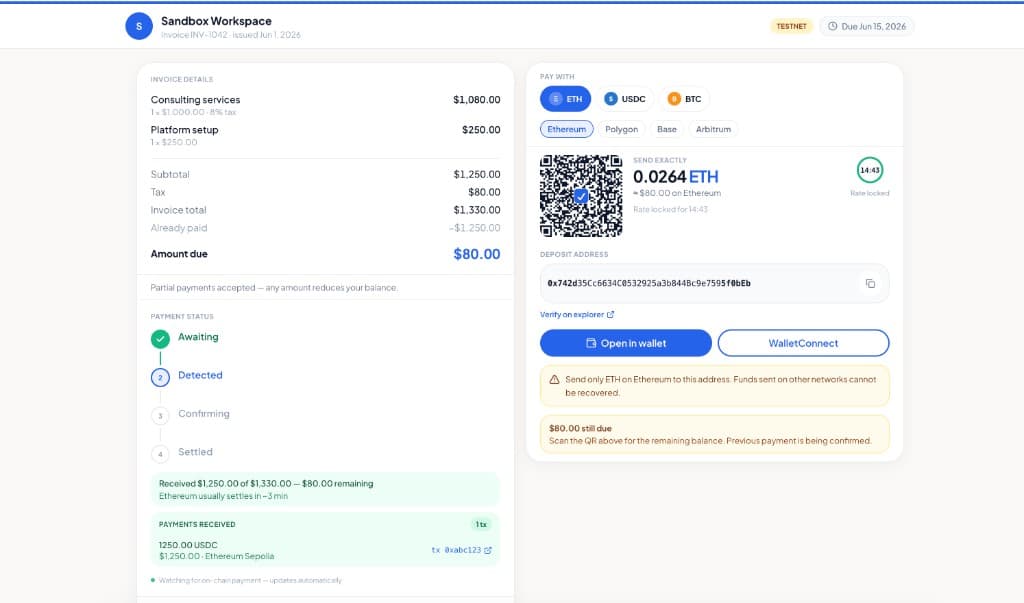
The single most common mistake is invoicing "0.5 ETH" instead of "$1,500." Between the time you send the invoice and the time the client pays, the coin price moves — and now one of you is unhappy about the difference. Quoting in fiat removes the argument: the invoice says $1,500, and the platform calculates the exact crypto amount due at the instant the client opens the payment page. You agreed a dollar price; you get a dollar's worth of crypto.
The step-by-step
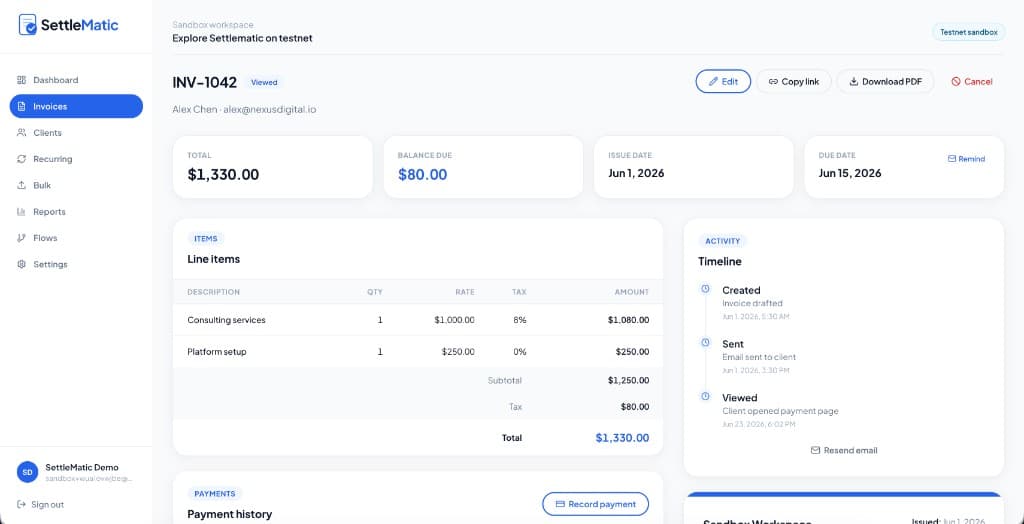
- Set your invoice currency to USD (or EUR/GBP). This is what your client sees and what your records show.
- Add line items and terms the way you would on any invoice — description, quantity, rate, tax if applicable.
- Choose which assets and networks you'll accept — for example USDC on Ethereum, USDT on Tron, ETH on Ethereum. An allowlist keeps clients from paying on a chain you don't want to support.
- Set the destination wallet funds should sweep to. In a non-custodial setup this is a wallet you control, not a platform balance.
- Send the hosted payment link. The client opens it, picks an asset and network, and sees the live fiat-quoted crypto amount plus a QR code.
- The platform detects the on-chain payment, marks the invoice paid, and sweeps the funds to your wallet.
That's the whole flow. From the client's side it's one link and a wallet confirmation.
Locking the amount: the detail that matters
Good platforms quote the crypto amount against your fiat figure at payment time and give a short window for the transaction to confirm. If the client underpays slightly because of network fees, status logic should handle it rather than generating a support ticket. Ask any tool you evaluate how it handles a 1–2% underpayment after gas — the answer tells you whether it was built for real billing or for tips.
Keeping the record clean
Because the invoice is fiat-denominated, your export captures the dollar value, the date, and an invoice number — exactly what your accountant needs, and exactly what a bare wallet address can't give you. Most jurisdictions treat the crypto payment as income at its fiat value on the day received, so having that value recorded automatically saves you reconstructing it later. (General information, not tax advice — see our tax reporting guide.)
Try it
The fastest way to confirm the flow fits your work is to run a free testnet invoice: create a USD invoice, pay it from a test wallet, and watch the fiat-to-crypto conversion and sweep happen.
Explore Settlematic
Ready to try the workflow in your own workspace? Start on testnet, then explore our how it works guide and product features.
Frequently asked questions
- Can I accept multiple coins on one USD invoice?
- Yes — you allowlist the assets and networks you'll accept, and the client picks one at checkout. Some platforms also support partial payments across different assets on a single invoice.
- What happens if the crypto price moves after I send the invoice?
- Nothing to you — the invoice is in USD. The crypto amount is calculated when the client pays, so they always pay the dollar equivalent at that moment.
- Do I have to convert the crypto to dollars?
- No. You receive crypto in your wallet. Converting to fiat is a separate decision you make on your own terms.